
EU gives wine industry a year to devise harmonised nutrition labelling scheme
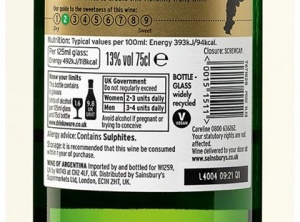
The wine industry has been given a year by the European Union to draw up a self-regulatory scheme for providing nutrition information on labels.
The EU regulation of the provision of food information to consumers lays down rules on listing ingredients and nutrition, but alcoholic drinks at more than 1.2% ABV are currently excluded.
But in a newly released report, the EU says that within a year “a harmonized approach aiming to provide consumers with information about the ingredients present in alcoholic beverages and the nutritional value of alcoholic beverages,” will be required.
However, the European Consumer Organsation BEUC says that a voluntary initiative will not be enough to bridge the “information gap” between alcohol and other drinks and says it is “regrettable” that the report does not insist on mandatory labeling of nutrition and ingredients.
On the other hand, the UK’s Wine and Spirits Trade Association (WSTA) has welcomed the decision not to compel producers to provide nutrition labelling.
“We welcome the Commission’s decision not to force mandatory labeling on alcohol at this stage and instead have turned to industry to come forward with the most effective way to properly inform consumers, without space limitations, in this digital age," said the WSTA chief executive Miles Beale.
“Trying to cram more information on product labels which have limited space is a backward step. We should not be using 20th century methods on a 21st century issue. People who want to know more about what they are drinking are very capable of going online and finding out for themselves.”
The Comite Vins (CCEV) says it is vital that any approach is harmonized at a European level. “We are committed to giving tailored and meaningful information to wine consumers and we will explore innovative developments in the area of food information in order to propose the best-adapted way to provide this meaningful information to wine consumers,” said general secretary Ignacio Sanchez Recarte.
The CCEV points out that wine is already one of the most regulated food products, covering definitions, manufacturing methods, oenological practices and labelling.
Some in the drinks industry have already taken steps to include nutrition information on a voluntary basis. In the UK, which has often led the way on nutrition labeling, supermarkets such as Sainsbury’s and Waitorse have backed putting calorie counts on bottles in recent years.