
Beaujolais 2018 vintage hailed as "legendary"
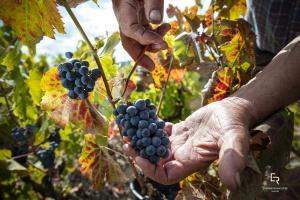
The 2018 Beaujolais vintage is already being described as “legendary” ranking alongside other standout years of 2017, 2015 and 2009 despite the harvest barely being over.
The Inter Beajolais trade body has described the wines as being “full-bodied, and generous combining smoothness and complexity” helped in no small part by the ideal ripening conditionswith no adverse weather conditions to deal with, enabling the grapes to ripen slowly and gradually.
Drawing on the water supply stocked up in the soil in the Sspring, on the whole, the vines did not suffer from the lack of rainfall. Consequently, the grape crop was in outstanding health.
The winemakers, who played it smart – taking their time before beginning to harvest and making the most of the warm, sunny September weather – harvested healthy, concentrated grapes, rich in sugar.
And the first wines wines tasted in the wineries are extremely promising according to Bertrand Chatelet, director of Sicarex Beajolais (Vine & Wine Research Institute). "They have the advantages of an early-ripening vintage, without having any of its disadvantages," he said. "They're velvety. The wines are going to extract their color and structure thanks to long periods of maceration. They are round and silky, but concentrated and rich. The tannins are subtle and elegant."
And Arnaud Chambost, MOF Sommelier 2000 concurred with this view. "The colours are crimson and dense, with dark purple-fuchsia hues. The wines radiate aromas of fleshy black fruit and flowers (peony, lilac), as well as a few hints of spice and licorice. On the palate, the wine combines depth, complexity, elegance and gourmandise. The tannins also have a nice fullness, resulting in aromas that linger nicely. The wines reflect the terroirs well, not only in terms of soil and sun exposure, but also in terms of the Gamay grape variety, whose personality expresses itself in optimal conditions."
Beaujolais comprises around 15,000 hectares to the north of Lyon, and is made up of 12 appellations. The 2,500 producers have a total annual production of 95 million bottles, including 32 million bottles of Beaujolais Crus, 35 million bottles of Beaujolais and 28 million of Beaujolais-Villages of which 40 is shipped to over 110 countries