
Applications for Italian vineyard planting rights oversubscribed by ten times
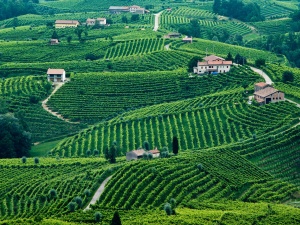
Italian wine producers applied for ten times the volume of planting rights available last year, asking for 64,036 hectares when only 6,722 hectares was on offer.
In the first two years since the EU regulations on planting rights came into force 2016, nearly three quarters (70%) of the requests came from only two regions – Veneto and Friuli, largely down to the successful DOC’s Prosecco, Delle Veneie and Valpolicella. However, since 2018 the demand for permits has moved to the south, with Puglia and Sicily making up an increasing proportion of requests. Puglia accounted for 44% (28,000ha) of the allocated quota in 2020 while Sicily comprised 21% (15,500ha).
“Despite the rules limiting the transfer of rights from one region to another, the market seems to be stronger than bureaucracy,” said the Italian trade magazine Corriere Vinicolo. While demand from the north of Italy has fallen,vineyards in Veneot and Friuli have increased, with Veneto exceeding 100,000 hectares, a 12% increase on 2016, ,while Friuli stands at 28,000 ha, a 13% increase over the same period.
In the south, however, the position is markedly different, where the strong demand from Sicily is offset by a 2% decline in vineyard area since 2016. In Puglia, meanwhile, the area under vines increased by 3% in the same time frame, though the increase in applications since 2018 indicates that the interest is not coming solely from Puglian producers, but also from those in the north.
And despite rules banning the transfer of planting rights, producers are still finding ways to circumvent the rules. To do this, a producer could buy a planted area with existing planting rights in Sicily, for example, where vineyards are plentiful and cheap, and then clear it and replant in the north. Corriere described this strategy as “out the back door and back in through the window.”