
Australian wine still widely available in Chinese market despite effective ban, claims Nimbility boss
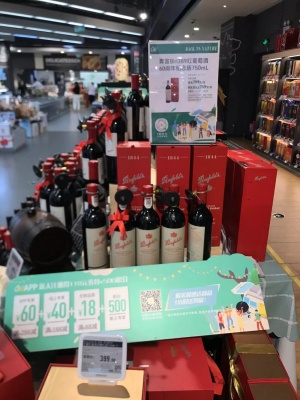
The Chinese market is still awash with Australian wine, despite restrictions and hefty tariffs which have been imposed on Australian wine imports since November 2020.
This is according to Ian Ford, co-founder of Nimbility, the specialist Asian marketing and trading agency, speaking to VINEX he claims that “surprisingly, from the standpoint of a China wine consumer, there are still abundant Australian wines available for purchase in the market, even close to two years into the ban.”
During 2019, the last year before Covid affected the market, Penfolds accounted for over 57% of the value of all Australian wines shipped to China. And Ford claims that Penfolds is still widely available in Chinese supermarkets, along with other Australian brands. A major new world wine producer recently identified Hema supermarket as their top performing retailer in China, indicating that it is unlikely that the Australian wine currently available is slow moving inventory. However, most of the Penfolds available on sites such as Taobao and 1919.com are 2018 or earlier, bottles which would have arrived prior to the ban.
But how is it possible, after nearly two years of an effective ban on Australian wines, that Chinese consumers are still able to buy these brands? Total Australian exports to China have all been wiped out by the restrictions, and Ford says that there are a few different possible explanations.
Firstly, there was an “extraordinary” quantity of Australian wine shipped to China in advance of the November 2020 tariffs, as the trade became increasingly aware of the government’s intentions. “We have direct feedback of major Penfolds importers loading and hoarding stock in advance of the ban, in one case as much as a year’s worth of inventory,” says Ford, adding that he has heard a claim that as much as five years worth of wine was being stockpiled in one major importer’s warehouse, which may partly explain the presence of so much Penfolds inventory still available in the retail sector.
Another explanation is that Australian wines are being smuggled into China and avoiding the Draconian tariffs, most likely from Southeast Asia or even direct from Australian tarders. However, vintages in supermarkets such as Hema are all from 2018, indicating that the wines were in market prior to the ban, and Ford pours cold water on this theory.
“While it’s possible that there are some parallel shipments getting into less visible trading corners of the market, in our view the outright smuggling of material quantities of Australian wines is highly unlikely,” he says. “The hand-carry market for fine wines from Hong Kong has been completely stymied by China’s border quarantine restrictions, so this route to market for “grey” bottles of Penfolds has also disappeared.”
Ford moots the possibility that demand for Australian wine has shrunk to such an extent that even available inventories can keep up. “When the China government slaps tariff on a product, it is also a signal to consumers, media and government contractors and the officals themselves that this product is out of favour,” he explains. This would have a knock on effect on the market for gifting, conspicuous consumption, dinners and entertainment, all key components of demand for Asutralian premium wine. At the same time prices for Penfolds have risen significantly, acting as an additional disinventive to purchase.
Yet another possible reason for the continuing availability of Australian wines in China is that many Penfolds wine retailers may have been drip feeding their stock into the market, to eke out availabity for as long as possible. “For many vendors of Penfolds wines in China, having availability of a brand like Penfolds for their clients is as important as the sales revenue generated by selling off the inventory,” says Ford, who claims to know of at least one major Penfolds importer adopting this approach.
Ultimately, Ford believes that the real reason for the continuing availability of Australian wine in the Chinese market is a combination of some or all of the aforementioned theories. “There is no indication that China’s punitive tariffs on Australian wines will be lifted ahead of the scheduled five year period [March 2026]. There are signs that the Chinese fine wine consumer has turned back to France and possibility Baijiu to fill their needs whle Chile and South Africa have picked up some of the more commercial gaps so far,” he concludes.